
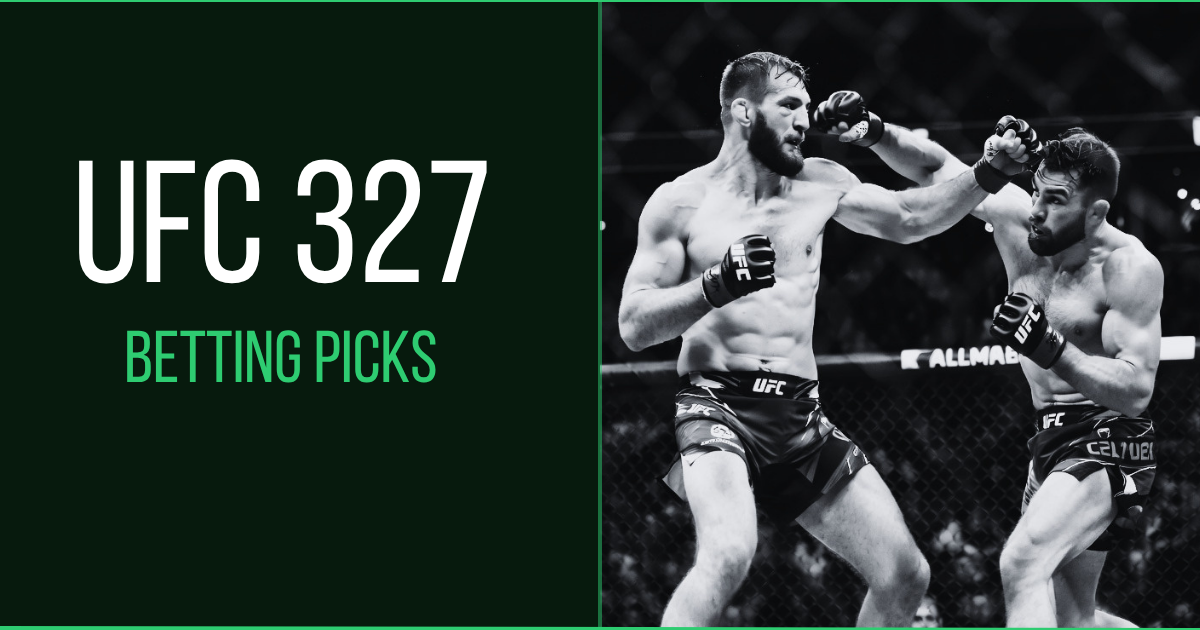
MMA prop bets let you bet on exactly how a fight plays out, not just who wins. Method of victory, round betting, fight goes the distance – each prop market has its own dynamics, its own level of market efficiency, and its own potential for value. This guide covers every major MMA prop bet type and how to approach each one. If you want to take that same “how it plays out” mindset further, daily fantasy MMA scores fighters on in-fight performance rather than just the final result.
What Are MMA Prop Bets?
A prop bet (short for proposition bet) is any wager that isn’t a straight moneyline win/loss – BestFightOdds is a useful place to compare prop odds across books. In MMA, props focus on the manner and timing of the finish rather than just the outcome. Because they receive less sharp action than the main line, prop markets are often priced with more margin – but they’re also less efficiently adjusted when value exists.
Key principle: Prop bets work best as a complement to your main card research, not a replacement. When you’ve done deep analysis on a fight and have a strong view on how it ends – not just who wins – that’s when props add genuine value to your betting.
The Main MMA Prop Bet Types
Method of Victory (MOV)
Prices winning by KO/TKO, submission, or decision separately for each fighter. This is the most widely available MMA prop and often the most valuable.
Example: Fighter A to win by KO/TKO at +180. Their straight win odds are -160. If you believe they’ll finish the fight when they win rather than going to decision, the MOV price reflects that specific edge.
Where value tends to sit: Fighters who are powerful strikers going up against opponents with a history of being stopped on the feet. Also submission specialists against opponents with poor grappling defence.
Fight Goes the Distance (FGTD)
A yes/no market on whether the fight reaches the final round. “Yes” typically prices around -130 to -160 for boring, defensive matchups; “No” prices around +100 to +140 for high-finishing fighters.
Example: A five-round title fight between two cautious wrestlers might have FGTD Yes at -200. A power striker vs power striker prelim fight might have FGTD No at -140.
Where value tends to sit: High-finishing fighters who rarely go to decisions are frequently underpriced on the “No” side, especially when the market has priced the fight purely on style without accounting for finishing rates.
Round Betting
Betting on which specific round the fight ends in, or picking a grouped range (Rounds 1-2, Rounds 3-5, etc). These carry significantly higher odds because precision is required.
Example: Fighter A to win in Round 1 at +350, to win in Rounds 1-2 at +180, to win in Round 3 at +600.
Where value tends to sit: Fighters with a strong history of early finishes against opponents who have been stopped quickly in the past. Grouped round betting (1-2) is more achievable and often priced better than the straight main line with a finish premium built in.
Over/Under Rounds
Total rounds is set at a specific number (typically 1.5, 2.5, or 4.5 for title fights) with over/under lines. Simpler than round betting but still requires a view on finishing likelihood.
Example: Total rounds Over 1.5 at -160, Under 1.5 at +120. If you strongly believe the fight ends in Round 1, the Under offers significantly more value than the moneyline alone.
Decision Markets
Some books offer separate lines for unanimous decision, split decision, and majority decision as method of victory options. These are niche but occasionally offer value when two cautious fighters are matched up and the market hasn’t priced the split-decision probability correctly.
Fighter Props (Performance Bonuses)
Increasingly common – betting on whether a fighter will earn a Performance of the Night bonus, whether a specific fighter will be knocked down, or total significant strikes landed over/under a number. These are highly variable in availability across books.
MMA Prop Bet Strategy: How to Find Value
Research finishing rates properly
The foundation of prop value is accurate finishing rate data. A fighter who wins 70% of their fights by finish has a completely different prop profile than a 70% finisher who predominantly goes to decisions. Use UFC Stats and Tapology to build precise finishing percentages – not career totals, but recent history at current competition level.
Separate finishing ability from finishing in this matchup
A submission specialist who finishes 60% of fights may have almost zero submission threat against an opponent with elite takedown defence who has never been submitted. The prop value depends on this specific matchup, not just historical rates in isolation.
Look at the opponent’s defensive record
Has the opponent been stopped before? At what level? A fighter who has been knocked out twice in their career carries different KO prop value than one who has never been finished despite facing heavy hitters. Finishing vulnerability compounds when both fighters have complementary profiles.
Example of a good prop angle: Fighter A is a powerful wrestler with a 65% finish rate by submission. Fighter B has been submitted twice in their last four fights and has questionable defensive grappling. Fighter A is -200 to win (moneyline). Fighter A to win by submission is +220. The submission implied probability in the moneyline is around 30% once you account for how often the fight is likely to go to decision. At +220 (31% implied), this is roughly fairly priced – but if your analysis puts the submission probability higher, there’s a case to make.
Use props to complement the main line, not replace it
The best use of a prop bet is when you have genuine conviction on both the winner AND the method. Betting the moneyline and the MOV together – if priced correctly – can meaningfully increase your expected return on a fight where you’ve done the research.
Prop Bet Mistakes to Avoid
- Chasing big numbers. A +600 prop is attractive, but if the implied probability is 14% and the real probability is 12%, it’s still negative EV. Chase value, not odds.
- Ignoring fight dynamics. A grappler who is losing on the feet may desperately seek a takedown to survive – which can actually increase submission probability for the other fighter. Props require reading the fight situation, not just historical stats.
- Betting props on every fight. Prop value requires genuine analysis depth. If you’re just guessing at MOV on every card fight, you’re adding variance without adding edge. Be selective.
- Not line shopping props. Prop prices vary significantly across books. A KO/TKO prop at +180 on one book might be +210 on another. Always check multiple books on props – the spread is typically wider than on main lines.
Picks that include prop angles – publicly tracked
Full card coverage before every event. Every pick with odds, unit sizes, and reasoning. All publicly logged at betMMA.tips from day one.
MMA Prop Bets FAQ
What is the best MMA prop bet?
Method of victory is generally the most valuable MMA prop market because it receives less sharp action than the main line and is available at most major sportsbooks. The “Fight Goes the Distance” market is also commonly profitable for bettors who have done thorough finishing rate research.
Are MMA props harder to win than moneyline bets?
They require more precision – you need to be right about both the outcome and the manner of finishing. But the higher odds compensate for this, and the markets are often less efficiently priced than the main line. The key is applying the same rigorous value assessment rather than betting props purely for the bigger payouts.
Which sportsbooks offer the best MMA prop markets?
Coverage varies significantly. Most major US books (DraftKings, FanDuel, BetMGM) and European books (bet365, Paddy Power) offer method of victory and FGTD markets. For the deepest prop coverage including round betting and performance bonuses, specialty MMA books tend to go deeper than general sportsbooks.
Can you parlay MMA prop bets?
Yes, but prop parlays compound the vig heavily. Each additional leg adds the book’s margin — see our full breakdown of UFC parlay betting for the math behind why. Use them sparingly and only when you have genuine conviction on multiple props, not as a standard approach.
How do I calculate the value in an MMA prop bet?
Convert the prop odds to implied probability, then assess the true probability based on your research. If a KO/TKO prop for Fighter A is +180 (implied 35.7%) and your research suggests a 45% chance of a KO finish, there’s a meaningful positive expected value edge worth betting.
About the Author
Rob Brown has been betting on MMA professionally since 2015. Every pick is publicly recorded and independently verified — no cherry-picking, no deleted bets. His full record is tracked at betMMA.tips and bettin.gs.
Get Premium Picks →